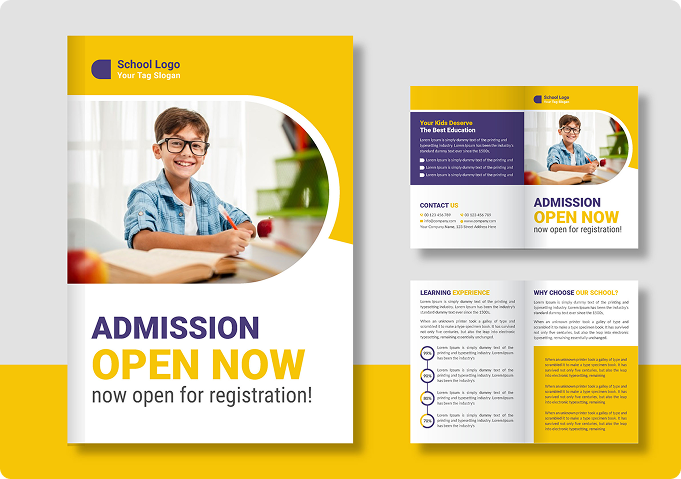
Why Traditional School Brochures Are Failing (And What Works Instead)
In this article
Why Traditional School Brochures Are Failing (And What Works Instead)
Why Traditional Brochures Fail
What Makes Visual Content Superior
Types of Visual Content That Work Better Than Brochures
How Visual Content Solves Key Pain Points
Why This Matters for Admissions & Branding
Partner With Experts for High-Impact Visual Content
Conclusion
Unlock how AI can transform your business in just one call
CONTACT US
Picture this: A parent walks into your school's open house, picks up your beautifully designed brochure, glances at it for a few seconds, and slips it into their bag never to be opened again. Sound familiar? You've invested time, money, and creative energy into those glossy brochures, yet they're sitting forgotten in drawers, car glove compartments, or worse, the trash.
Traditional brochures are losing the battle for parents' attention. They're text-heavy, visually flat, and fail to communicate the true scale and quality of your facilities. Parents today expect more; they want immersive, interactive experiences that help them visualize their child's future at your institution.
This is where strategic social media marketing services and innovative visual storytelling come into play. Schools that embrace video tours, 3D walkthroughs, and AI-powered ad creatives are not just capturing attention, they're converting curious parents into enrolled families. In this blog, we'll explore exactly why visual content outperforms traditional brochures and how your school can make the shift.
Why Traditional Brochures Fail
Brochures Get Ignored
Let's be honest: when was the last time you sat down and read a brochure cover to cover? Parents today are bombarded with information from multiple schools, all competing for their attention. A static, text-heavy brochure simply doesn't stand out in this crowded space.
The reality is that parents receive brochures from 5-10 schools during admission season. Most brochures look similar to generic photos, bullet points, and overly formal language. They lack interactivity, which means parents skim through them in seconds. Once taken home, they're rarely revisited.
In a world dominated by Instagram Reels, YouTube videos, and interactive websites, brochures feel outdated and disconnected from how modern parents consume information.
Parents Don't Remember Key Details
Even when parents do flip through your brochure, they're unlikely to retain much of what they see. Studies show that people remember only 10% of what they read but retain 65% of visual information even three days later. This retention gap is critical during admission season when parents are comparing multiple schools simultaneously.
Brochures fail at memory retention because they cram too much information into limited space, lack narrative flow, and don't create lasting impressions through static images. When parents can't remember what makes your school special, your carefully crafted messaging becomes meaningless. This is often why parents skip follow-ups or forget key differentiators even after campus visits.
Poor Visual Explanation of Facilities
Perhaps the biggest limitation of traditional brochures is their inability to convey the true scale, quality, and atmosphere of your facilities. A single photograph of your library, sports complex, or science lab can't communicate the actual size and layout of spaces, how different areas connect to each other, or the lighting and ambiance of the environment.
Parents want to know: "Can I imagine my child thriving here?" A flat, two-dimensional photo can't answer that question. They need spatial understanding, context, and a sense of being there, something traditional brochures were never designed to deliver.
What Makes Visual Content Superior
Higher Engagement with Rich Media
Visual content doesn't just capture attention, it holds it. Videos, motion graphics, and interactive elements create an immersive experience that keeps parents engaged far longer than any brochure could.
The numbers speak for themselves: video content is shared 1200% more than text and images combined, parents spend an average of 2.6 times longer on pages with video content, and social media posts with visuals receive 94% more views.
When you replace static brochures with dynamic visual content like virtual campus tours or explainer videos you're creating an experience that parents want to revisit, share with their spouse, and show to their children.
Visual Storytelling Builds Emotional Connection
Parents don't choose schools based on specifications alone, they make emotional decisions. They want to feel confident, excited, and reassured that their child will be safe, happy, and successful at your institution.
Visual storytelling allows you to show students actively engaged in learning, capture genuine moments of joy and achievement, highlight teachers' passion through video interviews, and walk parents through a typical day in your student's life. This emotional layer is what transforms curiosity into commitment.
Greater Clarity and Realism
One of the most powerful advantages of visual content is its ability to provide clarity and spatial understanding. 3D walkthroughs, aerial drone shots, and 360-degree panoramas give parents a realistic sense of how large your campus actually is, the quality and condition of your facilities, safety measures and security infrastructure, and the relationship between different buildings and spaces.
This level of clarity reduces uncertainty and builds trust. When parents can virtually explore your facilities at their own pace, they feel more informed and confident about their decision.
Types of Visual Content That Work Better Than Brochures
Virtual Campus Tours
Virtual campus tours have become the gold standard for facility showcasing. They allow parents to explore your entire campus from the comfort of their home, on their own schedule, as many times as they want.
What makes virtual tours so effective is their 360-degree views that let parents look around every space, room-to-room navigation that mimics an actual campus visit, and interactive hotspots that provide additional information about specific areas. Parents can start in your reception area, walk through corridors, enter classrooms, explore labs, and visit sports facilities all while sitting on their couch.
3D Walkthroughs & CGI Facility Showcases
For schools planning renovations, expansions, or new construction, 3D CGI walkthroughs are invaluable. They let you showcase facilities that don't exist yet with photorealistic accuracy, demonstrate future infrastructure during the planning phase, and help parents understand your vision and commitment to growth.
Even for existing facilities, 3D walkthroughs offer advantages over standard photography by showing spaces from optimal angles and highlighting specific features that might be missed in regular photos.
Explainer Videos & Motion Graphics
Sometimes, the best way to communicate complex information is through well-crafted explainer videos and motion graphics. These formats are perfect for breaking down your admission process step-by-step, explaining your curriculum philosophy, showcasing safety protocols, and highlighting unique programs or facilities.
A two-minute explainer video about your STEM program, complete with animated graphics showing how students progress from basic concepts to advanced projects, will always be more effective than a page of text describing the same information.
How Visual Content Solves Key Pain Points
Visual content fundamentally addresses the three core problems with traditional brochures. First, it solves the "ignored brochures" problem by meeting parents where they already are on their phones and social media. When you share a virtual tour link via WhatsApp or post a campus walkthrough video on Instagram, you're creating active engagement rather than hoping parents will passively read printed materials.
Second, it dramatically improves memory retention. Multi-sensory engagement through sight, sound, and motion creates stronger memory formation. Parents can revisit content multiple times before deciding, and emotional moments captured on video leave lasting impressions. This improved retention means that when parents are comparing schools weeks after initial contact, your institution remains top of mind and often explains why some schools convert enquiries better than others.
Third, visual content provides the spatial understanding that brochures never could. Virtual tours allow parents to see exact dimensions and layouts, understand campus navigation, observe natural lighting conditions, and get a genuine feel for your school's atmosphere. This clarity eliminates uncertainty and builds the confidence parents need to commit.
Why This Matters for Admissions & Branding
The impact of shifting to visual content extends far beyond simply replacing brochures. When you provide transparent, comprehensive visual access to your facilities, you demonstrate confidence in what you offer, building trust faster than any marketing copy ever could.
Visual content also enhances parent decision-making by reducing the stress of choosing a school. When parents can explore facilities virtually and understand programs through explainer videos, they move through the decision process faster and with greater certainty.
Most importantly, visual content helps schools stand out in a competitive market. When School A sends home a brochure while School B sends a personalized video tour link, which school makes a stronger impression? The investment in quality visual content pays dividends not just in immediate admissions but in long-term brand positioning as a forward-thinking, parent-centered institution.
Partner With Experts for High-Impact Visual Content
Creating professional-grade visual content requires specialized skills and experience. Hey Buddy is a creative digital marketing and immersive-tech agency that understands the unique challenges schools face during admission season. We develop strategic visual experiences that convert curious parents into enrolled families.
Our services include virtual campus tours, 3D CGI walkthroughs, explainer videos, digital prospectus design, and social media video content. We've helped schools across the country transform their admission marketing from forgettable to unforgettable.
Ready to leave traditional brochures behind? Let's create visual content that captures attention, builds emotional connections, and converts parents into your biggest advocates.
Conclusion
The era of traditional brochures as effective marketing tools is over. Parents today expect to explore your facilities virtually, understand your programs through engaging video content, and make informed decisions based on transparent, comprehensive visual information.
Visual content solves the core problems of low engagement, poor retention, and inadequate facility explanation that have always plagued print materials. More importantly, it positions your school as modern, transparent, and parent-focused exactly the qualities that win admissions in today's competitive landscape.
The shift from brochures to visual content isn't just about keeping up with technology, it's about respecting parents' time and showcasing your school with the clarity and impact it deserves.