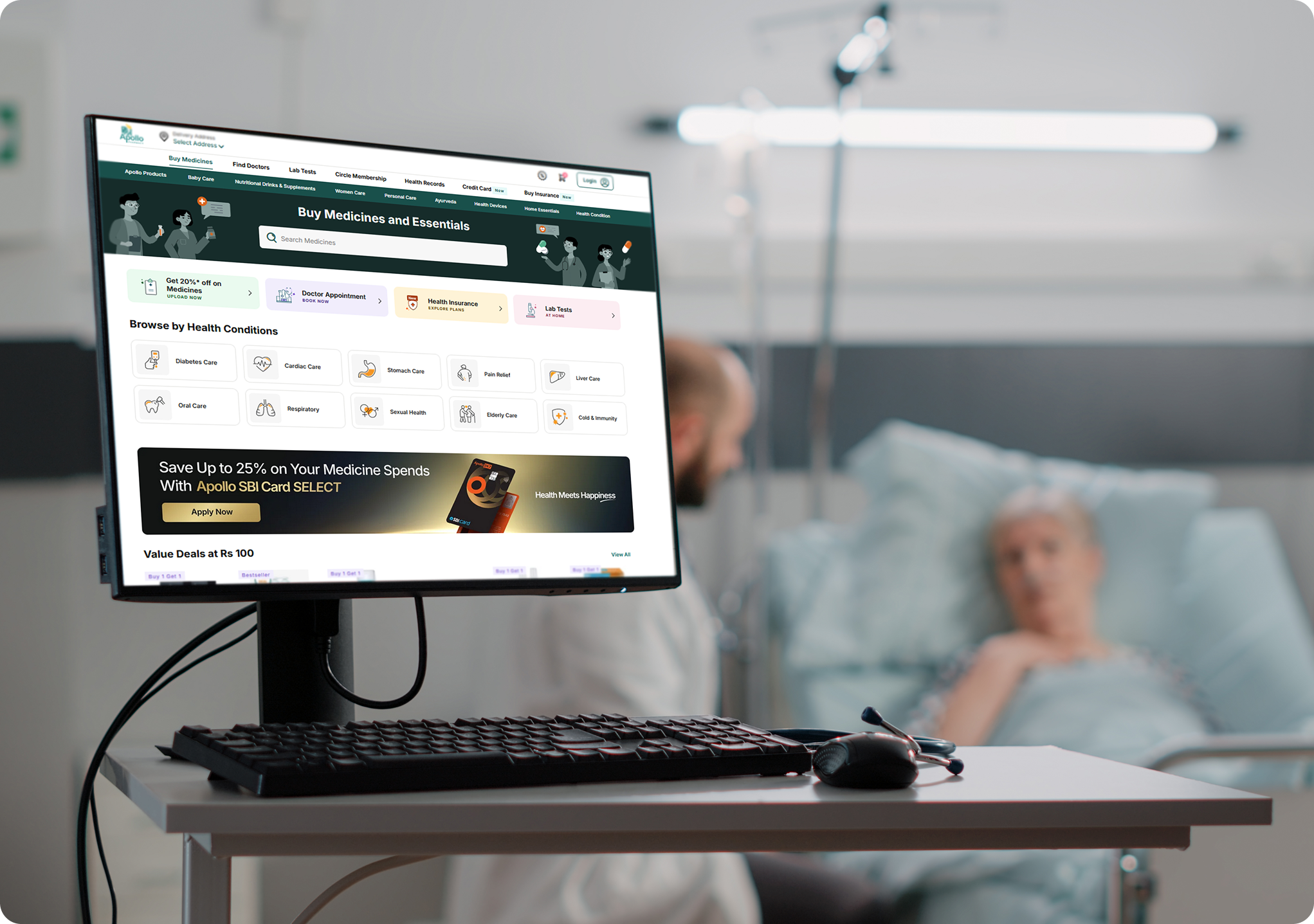
First Impressions Matter: How Your Hospital's Digital Presence Affects Patient Trust
In this article
First Impressions Matter: How Your Hospital's Digital Presence Affects Patient Trust
How Patients Choose Hospitals in the Digital Age
Key Reasons Patients Don't Trust Hospitals With Weak Digital Presence
The Real Impact of Weak Digital Presence on Hospitals
How Hospitals Can Fix Their Digital Presence and Rebuild Trust
Benefits of a Strong Digital Presence for Hospitals
Conclusion
Unlock how AI can transform your business in just one call
CONTACT US
Think about the last time you needed medical care. Chances are, your first instinct wasn't to pick up the phone it was to Google. You're not alone. Today's patients are digital-first, and they're making critical healthcare decisions based on what they find online. But here's the problem: many hospitals still treat their digital presence as an afterthought, and it's costing them patient trust.
When someone searches for a hospital and lands on an outdated website with broken links, missing information, or poor reviews, they don't just click away, they question the quality of care. In a world where Digital Marketing Services can make or break a brand, hospitals can't afford to ignore their online reputation. Let's explore why a weak digital presence damages patient trust and, more importantly, how to fix it.
How Patients Choose Hospitals in the Digital Age
Gone are the days when patients relied solely on referrals from friends or family doctors. While word-of-mouth still matters, the patient journey now begins online. Studies show that over 77% of patients use search engines before booking a medical appointment. They're comparing options, reading reviews, checking credentials, and evaluating websites all before making contact.
Google has become the first point of care. Patients type in queries like "best hospital near me" or "orthopedic surgeon in [city]," and your hospital's digital footprint determines whether you show up in those results. Hospital websites, Google Business Profiles, social media pages, and review platforms all play a role in shaping first impressions. If your digital presence is weak or inconsistent, you've already lost the opportunity to earn their trust.
The reality is simple: patients equate your online presence with your quality of care. A polished, informative, and accessible website signals professionalism and competence. A neglected one? It raises red flags.
Key Reasons Patients Don't Trust Hospitals With Weak Digital Presence
Outdated or Poorly Designed Hospital Website
Your website is often the first interaction a patient has with your hospital. If it takes forever to load, doesn't work on mobile devices, or looks like it hasn't been updated since 2010, you're sending a message and not a good one.
Slow load speeds frustrate users and drive them to competitors. Non-mobile-friendly designs alienate the majority of searchers who browse on their phones. Broken pages or outdated content like listing doctors who no longer work there or services you no longer offer erode credibility instantly. Patients think, "If they can't maintain their website, how can they maintain my health records?"
A hospital website should inspire confidence, not confusion. When design and functionality fail, so does trust.
Lack of Clear Information & Transparency
Transparency is the foundation of trust in healthcare. Yet many hospital websites fail to provide basic information patients need. Missing doctor profiles, unclear treatment options, and vague pricing details create frustration and suspicion.
Patients want to know who will be treating them. They want credentials, specializations, and even photos. They're looking for clarity on what procedures involve, potential costs, and what to expect during their visit. When this information is hidden or nonexistent, patients assume you're hiding something or worse, that you're disorganized.
Incomplete contact details or confusing location information add another layer of distrust. If someone can't easily figure out how to reach your hospital or find your address, they'll simply choose one that makes it easier.
Negative or Missing Online Reviews
Online reviews have become the digital equivalent of word-of-mouth recommendations. Patients trust what other patients say. A study found that 84% of people trust online reviews as much as personal recommendations. When your hospital has negative reviews with no responses or worse, no reviews at all it's a credibility killer.
Negative reviews aren't necessarily the problem. It's how you handle them. Ignoring complaints or failing to address concerns publicly tells patients you don't care about feedback. On the other hand, thoughtful, professional responses demonstrate accountability and a commitment to improvement.
No reviews at all? That's even more concerning. It suggests your hospital is invisible online or that patients aren't engaged enough to leave feedback neither is a good look.
Weak SEO & Low Search Visibility
Even if your hospital offers world-class care, it won't matter if patients can't find you online. Weak SEO means you're buried on page three of Google search results, where virtually no one looks. Without proper local SEO, your hospital won't show up in Google Maps or local search results, which is where most patients start their search.
Local SEO signals like consistent NAP (name, address, phone number) across directories, optimized Google Business Profiles, and location-based keywords are essential. If your hospital isn't ranking for "hospital near me" or "emergency care in [city]," you're losing patients to competitors who are.
Search visibility isn't just about being found it's about being perceived as legitimate and relevant.
No Active Social Media or Patient Engagement
Social media isn't just for sharing memes. For hospitals, it's a powerful tool for building trust, educating patients, and humanizing your brand. Inactive or unverified social media profiles signal neglect. No educational content, patient stories, or health tips? You're missing out on opportunities to engage and build relationships.
Patients follow hospitals on social media to stay informed about health topics, learn about new services, and get a sense of your hospital's culture. When your profiles are dormant, it reinforces the perception that you're out of touch.
The Real Impact of Weak Digital Presence on Hospitals
A weak digital presence doesn't just hurt your online reputation, it has tangible business consequences. First, you lose patient trust, which is the cornerstone of healthcare. When patients don't trust you online, they won't trust you with their health.
Second, you experience reduced appointment bookings. Patients who can't find you, don't like what they see, or encounter a frustrating website will book with a competitor instead. Third, you face a competitive disadvantage. Hospitals with strong digital presences attract more patients, build better reputations, and dominate local search results.
Finally, your brand reputation takes a hit. A weak digital presence makes your hospital look outdated, unprofessional, or careless perceptions that are hard to reverse.
How Hospitals Can Fix Their Digital Presence and Rebuild Trust
Build a Fast, Secure, Patient-Friendly Website
Start with the basics: optimize your website for speed and mobile devices. Ensure every page loads quickly and displays correctly on smartphones and tablets. Implement HTTPS security to protect patient data and boost search rankings. Simplify navigation so patients can find information in just a few clicks.
A patient-friendly website is intuitive, accessible, and designed with the user in mind. Prioritize clarity over complexity, and make sure critical information like appointment booking, contact details, and services is front and center.
Improve Hospital SEO & Local Visibility
Invest in hospital SEO to improve your search rankings. Optimize your Google Business Profile with accurate information, high-quality photos, and regular updates. Use location-based keywords throughout your website content, meta descriptions, and headings. Implement structured data markup to help search engines understand your services better.
Local SEO is especially critical for hospitals. Ensure your NAP is consistent across all online directories, and encourage satisfied patients to leave Google reviews. The more visible you are locally, the more trust you build with your community.
Strengthen Online Reputation Management
Actively manage your online reputation by encouraging patients to leave reviews. Make it easy by sending follow-up emails with direct links to review platforms. More importantly, respond to all reviews positive and negative professionally and promptly.
Addressing complaints publicly shows potential patients that you take feedback seriously and are committed to continuous improvement. It humanizes your hospital and demonstrates accountability.
Share Trust-Building Content
Content is king when it comes to building trust. Publish doctor profiles with credentials, photos, and areas of expertise. Share patient testimonials and success stories (with permission). Create a blog with health tips, FAQs, and condition-specific information that positions your hospital as an authority.
Leveraging AI Ads Creative Service can help you create engaging, personalized content that resonates with your audience and builds credibility faster.
Use Social Proof & Transparency Signals
Display certifications, awards, and accreditations prominently on your website. Share real patient stories and outcomes. Highlight partnerships with reputable medical organizations. These trust signals reassure patients that your hospital meets high standards of care.
Transparency signals like publishing quality metrics, safety records, or patient satisfaction scores further enhance credibility and set you apart from competitors.
Benefits of a Strong Digital Presence for Hospitals
When you invest in a strong digital presence, the benefits are transformative. You increase patient trust, which leads to higher appointment conversions and stronger patient-provider relationships. Your hospital gains long-term brand authority, making it the go-to choice in your community. You attract better talent, secure partnerships, and establish your hospital as a leader in healthcare.
In short, a strong digital presence isn't just good marketing, it's essential to your hospital's growth and reputation.
Conclusion
In today's digital-first world, trust starts online. Patients are judging your hospital long before they walk through your doors based on your website, your reviews, your search visibility, and your social media presence. A weak digital presence doesn't just hurt your reputation; it actively drives patients away.
The good news? It's fixable. By investing in a patient-friendly website, improving SEO, managing your online reputation, and sharing trust-building content, you can transform your digital presence and rebuild patient trust. The hospitals that thrive in the future will be those that recognize this truth: digital credibility is healthcare credibility. Don't let a weak online presence stand between your hospital and the patients who need you.